
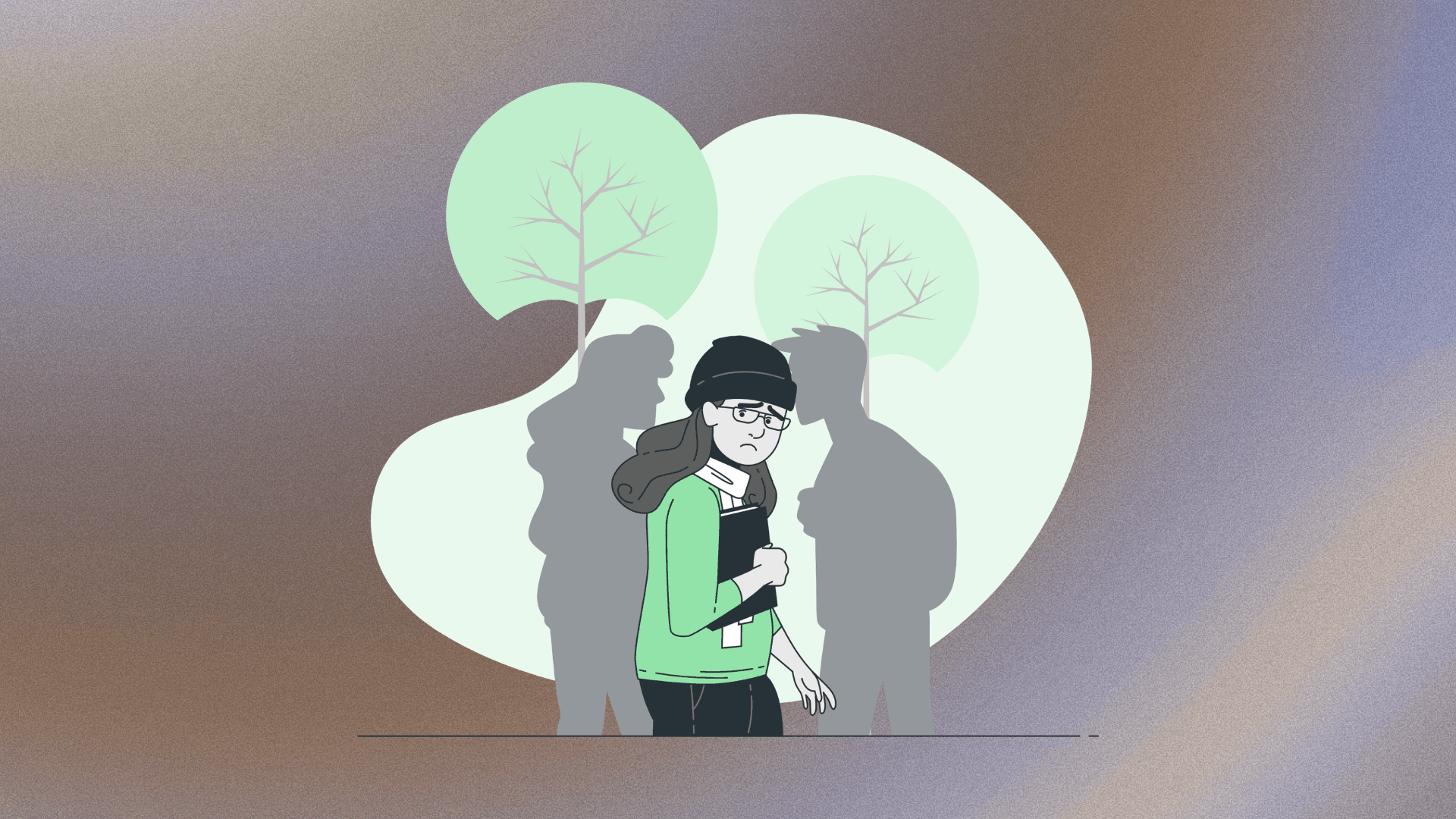
Social anxiety disorder
Social anxiety disorder is one of the most common anxiety disorders. It is often confused with shyness, like someone being simply quiet or reserved. But social anxiety disorder goes beyond these common traits in the population.
Social anxiety disorder :
Social anxiety disorder is one of the most common anxiety disorders. It is often confused with shyness, like someone being simply quiet or reserved. But social anxiety disorder goes beyond these common traits in the population.
Social anxiety occurs when you fear embarrassment or humiliation in a social situation; that you will be criticized or judged by others. Common social situations that often trigger social anxiety are giving a school or work presentation in front of an audience. Other situations can be entering a room full of people, introducing yourself to someone you don't know, or smaller things like calling a taxi or ordering food, that may trigger thoughts about you making a fool of yourself or you’re failing the task. These thoughts often provoke anxiety, making your heart beat fast or your hands shake, your mouth drying up, or you starting to blush. This, in turn, often makes you focused on your symptoms, making you even more afraid that they will be seen by others. As a result, you may become overly self conscious of the things you are thinking about as well as what you are feeling. Note that this doesn’t happen because you lack preparation. On the contrary, a common problem in social anxiety is actually overpreparing yourself. For example, before giving the presentation, the anxiety you feel may lead you to develop different safety behaviors, such as repeating what you are going to say in your head or imagining different scenarios of what could happen and how to act, such as someone asking you a specific question and how to answer it. During the presentation you may be under the impression that all eyes are on you and that people notice your physical sensations; which can lead you to safety behaviors such as avoiding eye contact or trying to hide your blushing. After the presentation, your social anxiety may make you start doing other safety behaviors like going through in your mind about what happened. Safety behaviors make you feel temporarily more safe, but maintains your social anxiety in the long run. Avoiding social situations has the same effect: You may feel that not engaging in such activities helps you by not having to feel so much anxiety. But avoidance makes your life smaller and smaller, restricting your life and freedom.
CBT as an effective treatment for social anxiety
Research have shown that cognitive behavior therapy is a very effective treatment for social anxiety, through the combination of exposure and cognitive restructuring.
In exposure, your therapist will help you to gradually confront situations that trigger your anxiety, such as giving a presentation or another situation where you are in the center of attention, without using safety behaviors. Exposing yourself multiple times, and for a long period of time, will help you discover something new and eventually reduce your anxiety. This will help you realize that you are capable of going towards your personal goals even if you feel anxious at the beginning, creating a whole new way of engaging with feared situations. Your therapist will encourage you to actively face what you have avoided all these years.
In cognitive restructuring, your therapist will help you to step back from the thoughts and beliefs that triggers your anxiety and look at them more realistically. These thoughts are most of the time unrealistic, such as “I will be laughed at if i give the presentation” or “People will try to trap me with very complicated questions.” As you begin to examine and challenge these thoughts and beliefs, you create a space to consider more realistic perspectives. Over time, this helps reduce the unhelpful thoughts and beliefs and the intensity of the anxiety that is consequent to it, allowing you to respond in a more effective way to difficult situations.